
Dental veneer is a layer of material placed over a tooth to improve the aesthetics of a smile/or protect the tooth’s surface from damage .
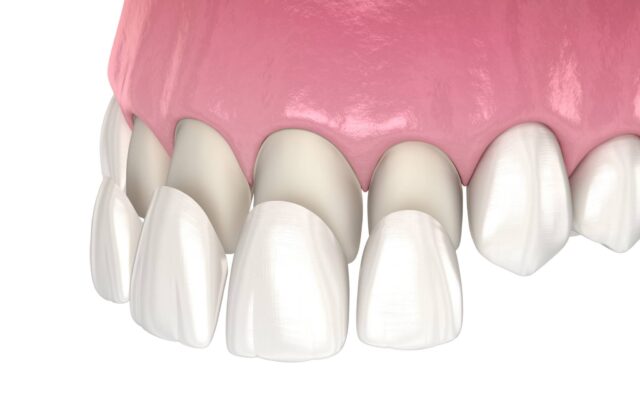
Why Veneer?
- Close gaps between teeth
- Repair chips or cracks
- Reshape distorted or misshapen teeth
- Lengthen short or uneven teeth
- Straighten slightly crooked or overlapping teeth
- Cover slightly dark or discolored teeth with a whiter surface
How much do Veneers cost ?
Dental veneer cost ranges from NPR 5000 – 8000 for composite veneer to NPR 21,000 for porcelain veneer. For more price details of veneer please Visit Our Prices / Services Page
Types Of Veneer
Three types are available:
- Direct Composite Veneer: It is directly placed (built- up in the mouth )
- Indirect Composite Veneer: Indirectly fabricated by a dental technician in a dental lab, and later bonded to the tooth .
- Porcelain Veneer (Emax Veneer): It is only indirectly fabricated. It resists stains better.
Who are not a good candidate for veneers?
- Not a good choice for individuals with unhealthy teeth (e.g. those with decay /gum diseases ), weakened teeth as a result of decay ,fracture, large dental fillings.
- People who clench (grind their teeth).
No. of visits ?
It takes 1-2 visits depending upon the type of veneer
Things to be followed after placement of Veneer
- Maintain good oral hygiene practices, including brushing, flossing, and rinsing with mouthwash .
- Avoid stain -causing foods and beverages (e.g. coffee, tea, red wine.)
Contact us to learn more about Dental Veneers in Nepal
Before - Discolored Tooth Treated with Direct Composite Veneer
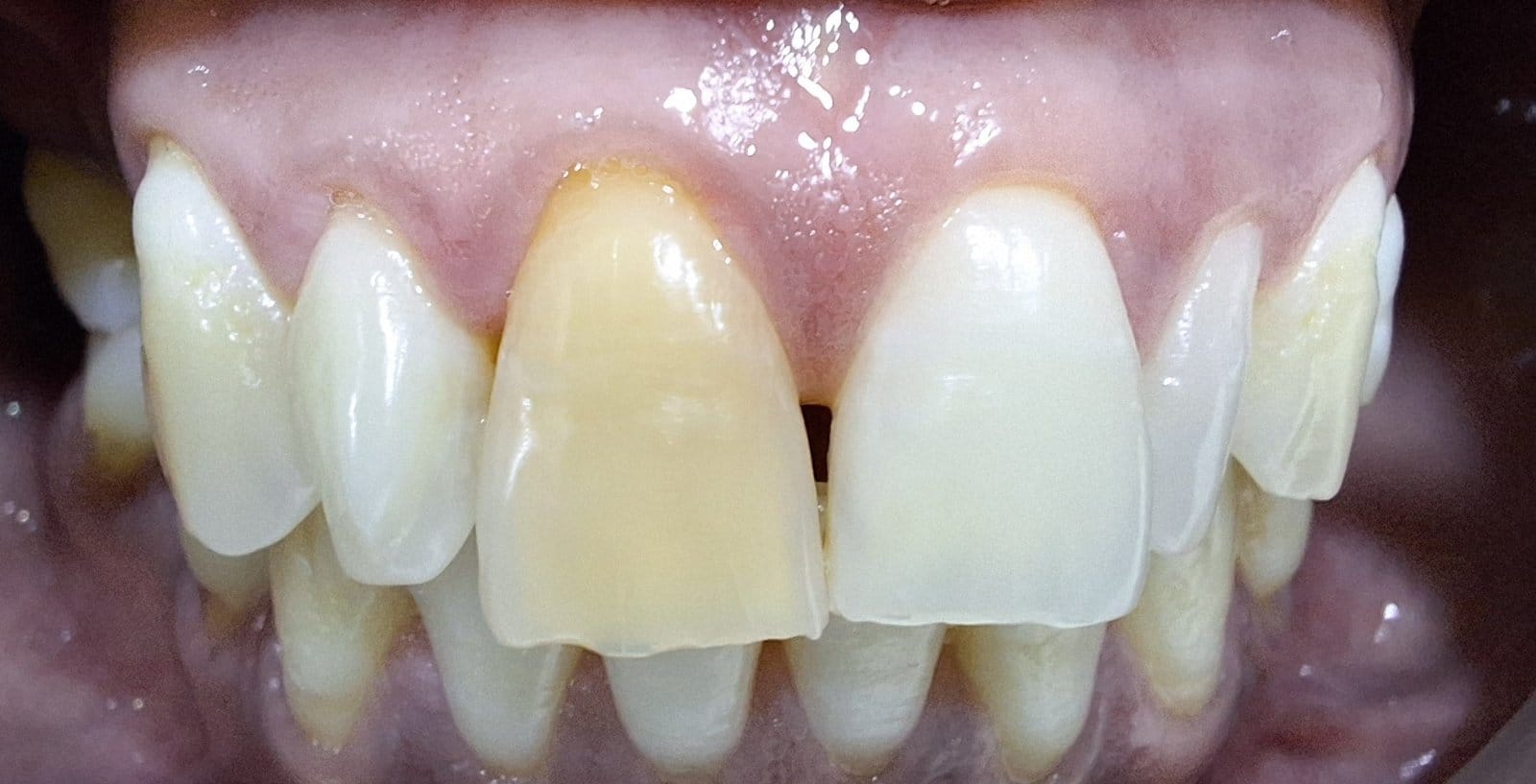
After - Discolored Tooth Treated with Direct Composite Veneer
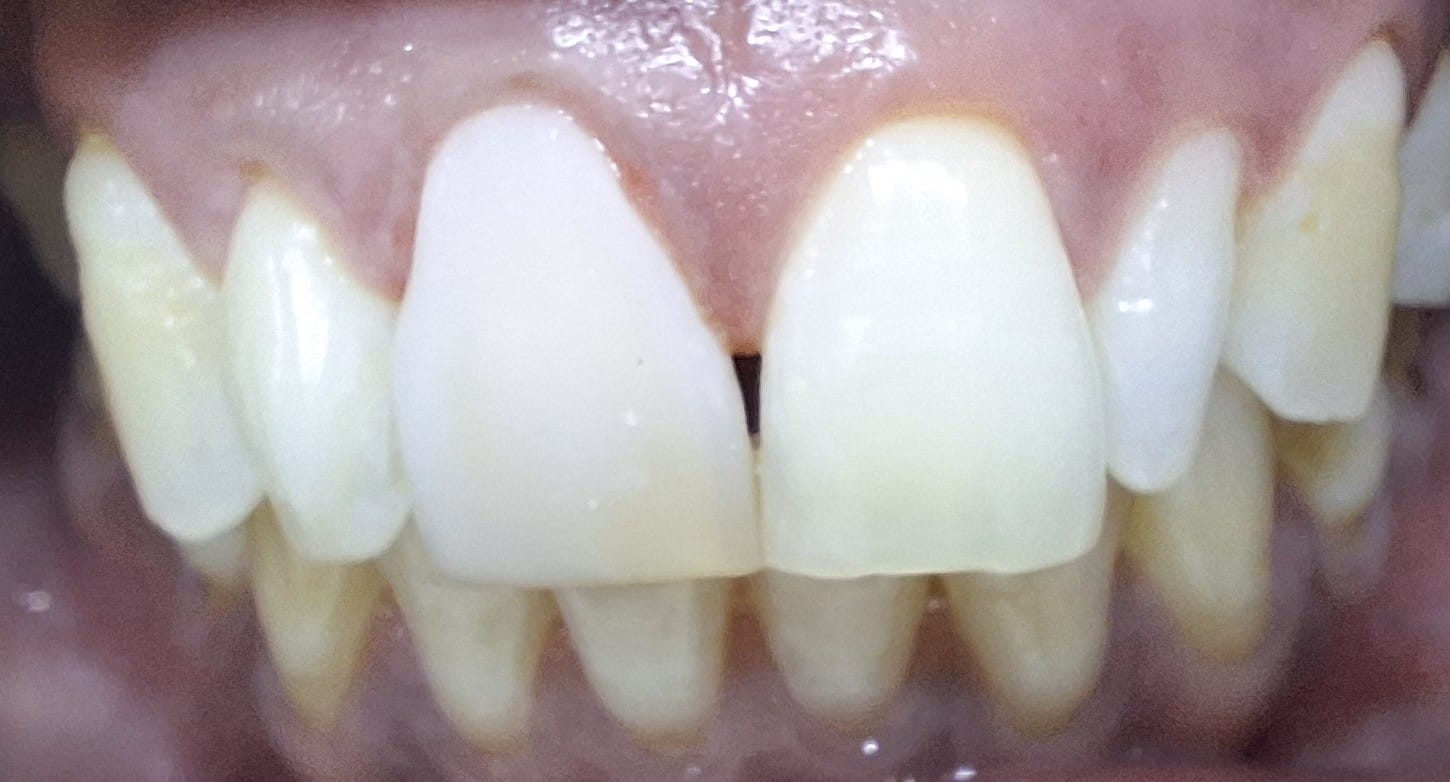
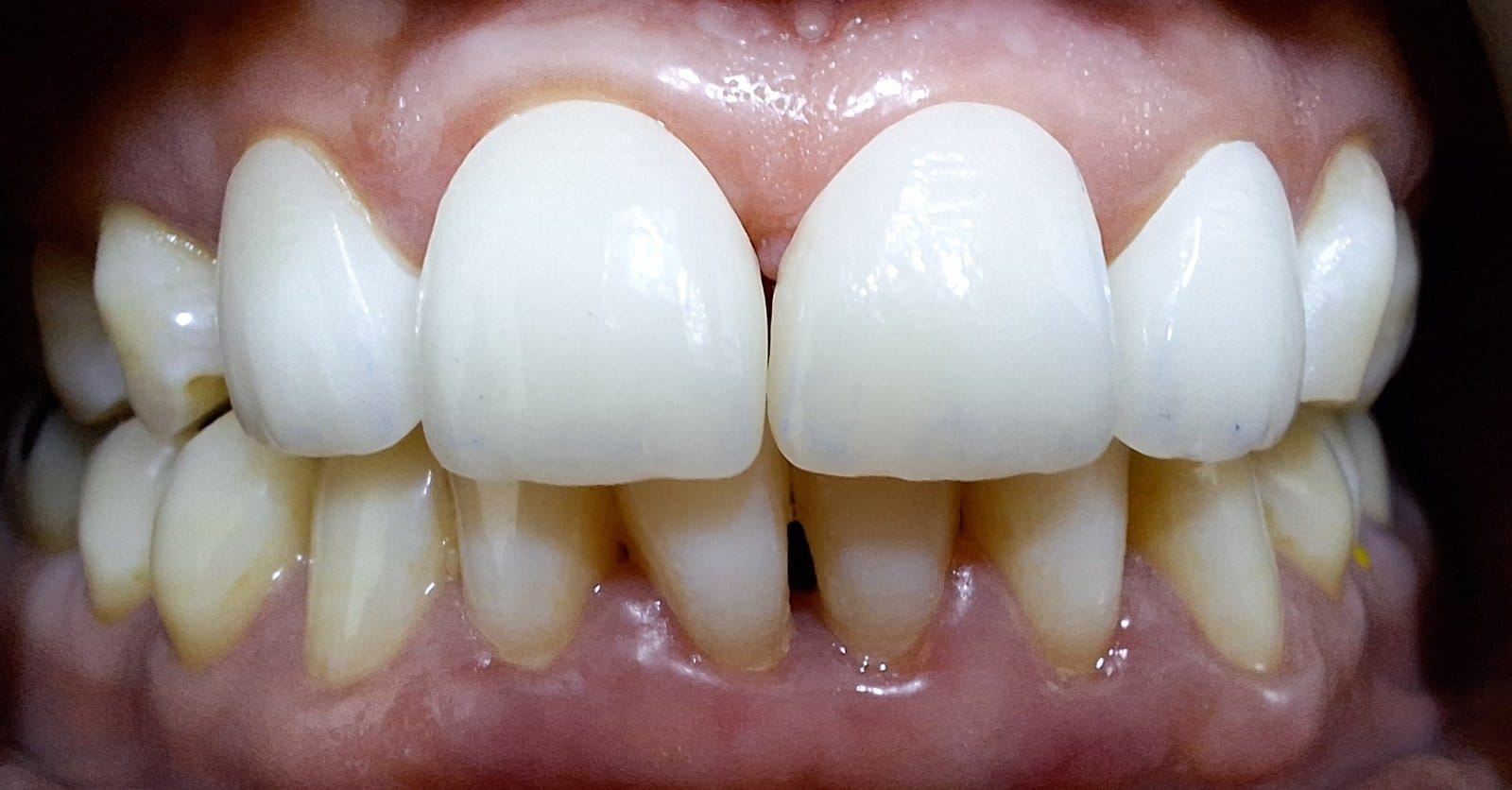
Before - Midline Diastema Closure with Indirect Veneer (Emax)
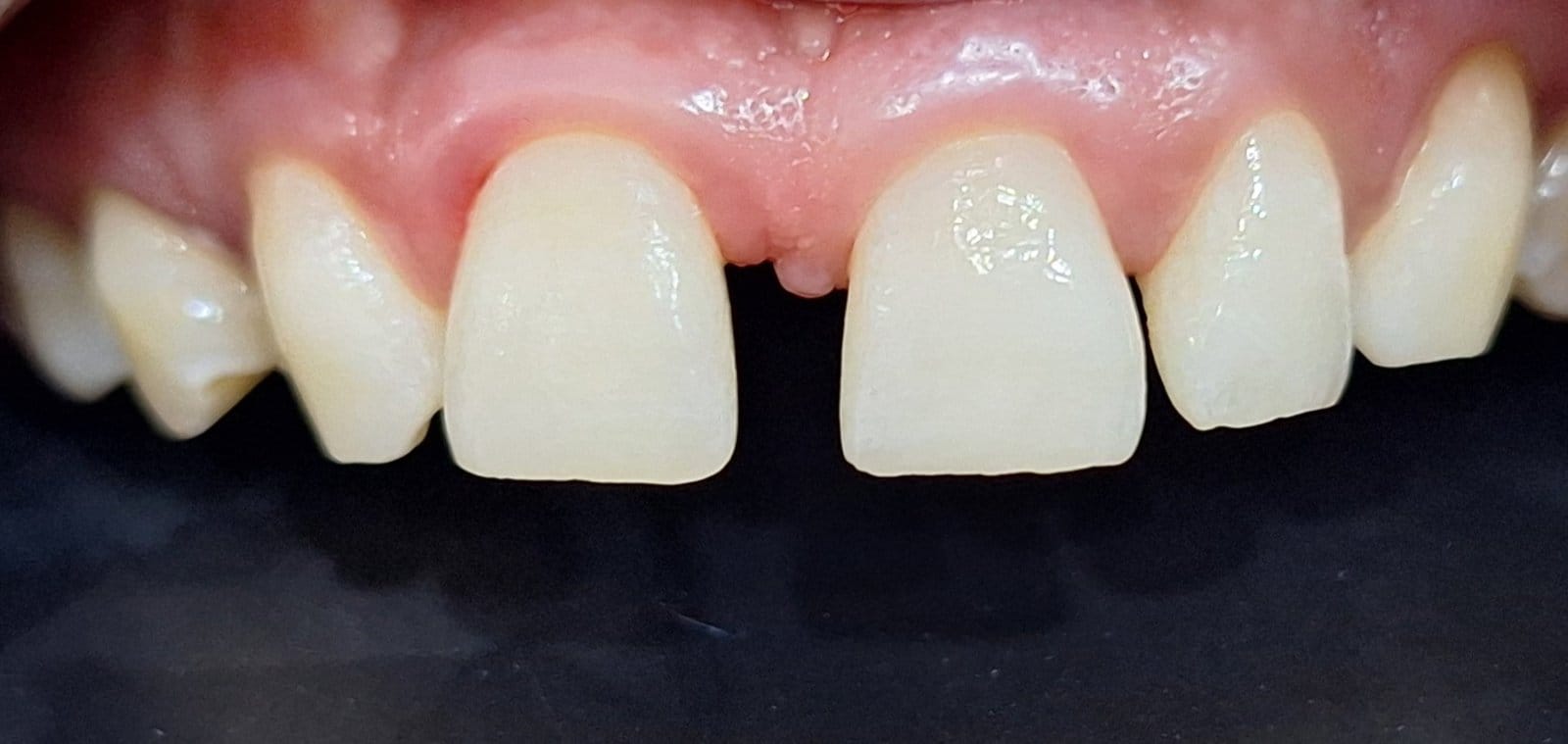
After - Midline Diastema Closure with Indirect Veneer (Emax)
Frequently Asked Questions
Dental Veneers in Nepal — Your Questions Answered
Quick answers about composite and porcelain veneers at DentaLife Oral Concern, Kathmandu.
What are veneers?
-
A dental veneer is a thin shell of composite resin or porcelain bonded to the front surface of a tooth to improve its appearance. Veneers are used to:
- Close gaps between teeth (diastema)
- Repair chipped or cracked teeth
- Cover discoloured or stained teeth that whitening cannot fix
- Reshape teeth that are too short, uneven, or slightly crooked
- Correct mildly misshapen or worn teeth
Veneers improve only the appearance of teeth — they are a cosmetic treatment, not a structural one. A heavily damaged or decayed tooth needs a crown, not a veneer.
-
Feature Composite veneer Porcelain (eMax) veneer Cost NPR 5,000–8,000 NPR 21,000 Fabrication Direct (same visit) or indirect (lab-made) Indirect — lab-fabricated only Appearance Natural; may stain over time Most natural; resists staining better Durability 5–7 years 10–15+ years Tooth removal Minimal to none Slight enamel preparation needed Reversibility Generally reversible Irreversible (enamel is permanently altered) Visits 1 visit (direct) or 2 (indirect) 2 visits Composite veneers are a great starting point — affordable, fast, and reversible. Porcelain veneers are the premium choice for the longest-lasting and most natural-looking result. -
- Direct composite veneer: The dentist builds up composite resin directly onto the tooth in a single appointment — no lab involved. Faster and more affordable. Good for simple shape or colour corrections.
- Indirect composite veneer: A dental technician fabricates the veneer in a lab to precise specifications, then the dentist bonds it to the tooth. Requires 2 visits but typically achieves a more refined, accurate result than direct placement.
Cost & suitability
-
At DentaLife Oral Concern, Kathmandu, veneer costs per tooth are:
- Composite veneer (direct or indirect): NPR 5,000–8,000
- Porcelain veneer (eMax): NPR 21,000
Most smile makeovers involve 4–8 veneers across the front teeth. Your dentist will advise how many are needed for your desired result. For full pricing, see our Prices & Services page.
-
Veneers are suitable for patients with healthy teeth and gums who want cosmetic improvement to their smile. You are not a good candidate if you:
- Have active tooth decay or gum disease — these must be treated first
- Have heavily damaged or weakened teeth — a crown is more appropriate
- Grind or clench your teeth (bruxism) — this will crack or fracture veneers over time
- Have very little remaining enamel — veneers need enamel to bond to
A consultation at DentaLife will confirm whether veneers or an alternative treatment is right for you.
-
A veneer covers only the front surface of a tooth — it is thin, minimally invasive, and purely cosmetic. A crown covers the entire tooth and is chosen when the tooth is structurally compromised — heavily decayed, cracked, or root canal treated.
If your tooth is healthy but looks wrong, a veneer is the right choice. If your tooth is damaged and needs protection, a crown is needed.
Procedure & aftercare
-
- Direct composite veneer: 1 visit — built directly on the tooth in a single appointment
- Indirect composite or porcelain (eMax) veneer: 2 visits — tooth preparation and impression at visit one, bonding of the finished veneer at visit two (1–2 weeks later)
-
Direct composite veneers typically require no anaesthesia and are painless throughout. For indirect composite or porcelain veneers, a small amount of enamel is removed under local anaesthesia — the procedure is comfortable and any sensitivity after settles within a few days.
-
Composite veneers last approximately 5–7 years; porcelain veneers last 10–15 years or more. To maximise their lifespan:
- Brush twice daily and floss around veneered teeth — veneers do not decay but the tooth underneath can
- Avoid biting directly into very hard food (ice, bones, hard candy) — this can chip veneers
- Minimise tea, coffee, red wine, and tobacco — composite veneers are more prone to staining than porcelain
- Wear a night guard if you grind your teeth — grinding is the most common cause of veneer fracture
- Attend regular dental check-ups every 6 months
-
Whitening gel does not work on veneers — it only acts on natural tooth enamel. Porcelain veneers resist staining very well and rarely need attention. Composite veneers can pick up some staining over years; surface polishing at a dental check-up can restore their appearance, or they can be replaced when their lifespan is reached.
If you are planning to whiten your natural teeth, do this before getting veneers — the veneers are then made to match your new, whiter shade.
Booking
-
- WhatsApp (fastest): Message +977-9843488192 with your preferred date and time — we reply within 2 hours (Sunday–Friday)
- Call: +977-9843488192 · Landline +977-1-4163520
- Walk-in: Kantipath, Jamal, Kathmandu — Sunday to Friday, 10AM–6PM
- Online: Book an appointment
Interested in veneers?
Book your consultation via WhatsAppDentaLife
Dental Clinic in Kathmandu





Copyright © 2026 by DentaLife Oral Concern Pvt. Ltd. – Dental Clinic in Kathmandu. +977-9843488192
Copyright © 2025 by DentaLife Oral Concern Pvt. Ltd – Dental Clinic in Kathmandu. All rights reserved.
+977-9843488192