
There are different ways of Replacement of missing tooth/teeth.
- Dentures – Complete Dentures
- Removable Partial Dentures
- Cast Partial Denture CPD
- Implant Supported Dentures
- Bridges
- Implants
For Cost: Visit Our Prices / Services Page
DENTURES
They are the prosthetic devices that replaces missing teeth and are supported by the surrounding soft and hard tissues of the oral cavity.
Types Of Dentures
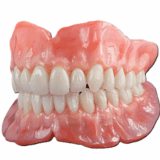
- Complete Dentures :

It replaces missing teeth in a single/both the jaws.
Indications:
- Completely missing teeth in one/both arches
- Extensive periodontal diseases.
- Grossly decayed teeth.
- Lack of financial resources for alternative treatment.
- Patient refused partial dentures
Contraindications:
- Epileptic patients .
- Patients with psychological disorders.
2. Removable Partial Dentures:
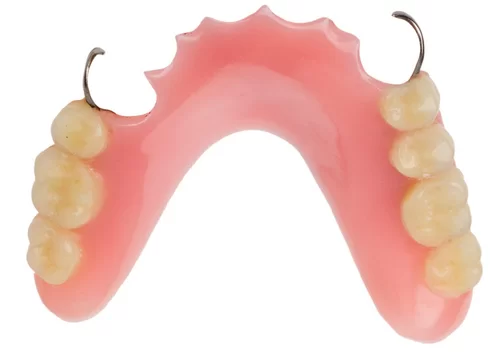
It replaces single/few missing teeth. It provides function and aesthetic for patient who cannot have tooth for any reasons.
3. Cast Partial Denture CPD:
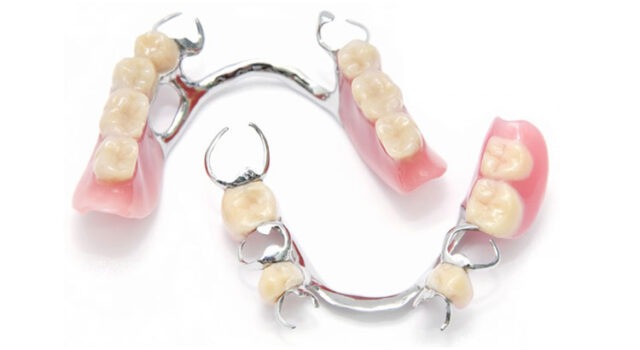
A cast partial denture is a removable dental prosthesis that replaces missing teeth with artificial teeth attached to a metal framework, typically made of a metal alloy like cobalt-chromium. It’s designed to fit over the gums and remaining natural teeth, using clasps or precision attachments for retention.
4. Implant Supported Dentures : A denture that is supported by and attached to implants .
Indications:
- When a person doesn’t have any teeth in the jaw , but has enough bone in the jaw to support implants.
Things to be followed after wearing Dentures
- Always remove any type of denture you wear to clean the denture and the gum area after every meal.
- Do not sleep with the dentures at night time (to give the rest to your gums).
- Always store the dentures in a container filled with clean water at room temperature.
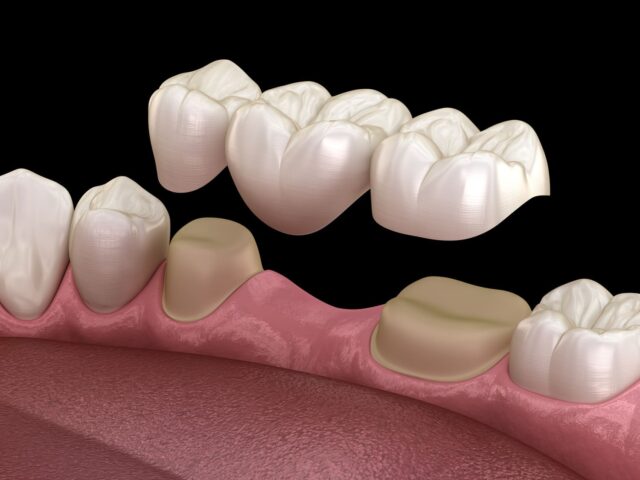
5. Bridges
A fixed dental restoration that replaces one or more missing teeth by joining an artificial tooth to adjacent teeth or dental implants.
Types Of Bridges
- Metal
- Metal-Ceramic
- All-Ceramic
- Zirconia
How long do Bridges Last??
- Bridges last a lifetime. However, they do sometimes loosen or fall out.
- Practicing good oral hygiene can ensure the longevity of your bridge.
- A bridge lose support if your adjacent teeth holding it in place is damaged due to dental diseases.
How to prevent damage to bridges ??
- Maintain the oral hygiene with regular dental follow-up.
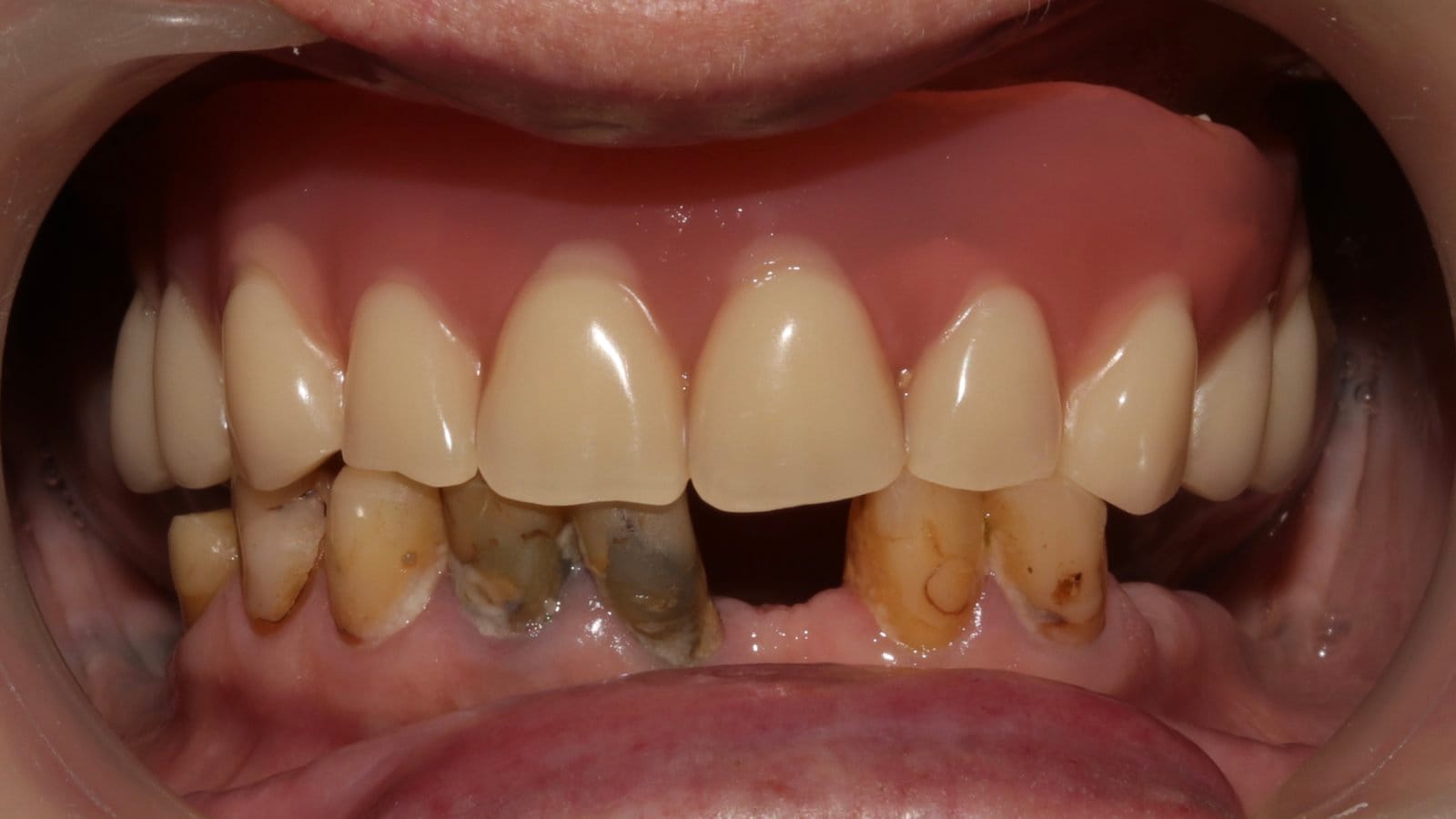
Before Replacement of missing teeth with Cast Partial Denture and Bridge.
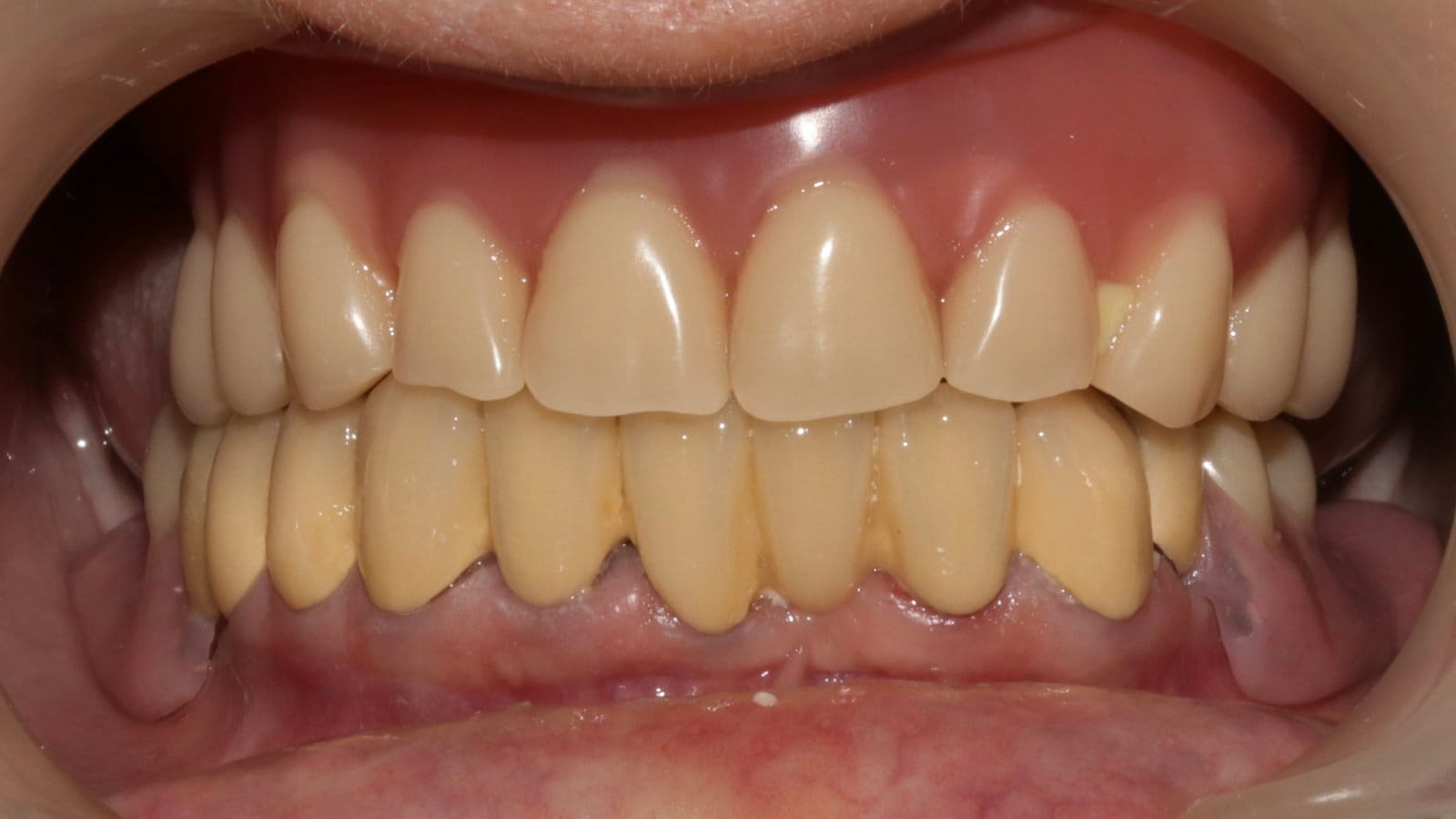
After Replacement of missing teeth with Cast Partial Denture and Bridge.
6. Dental Implants
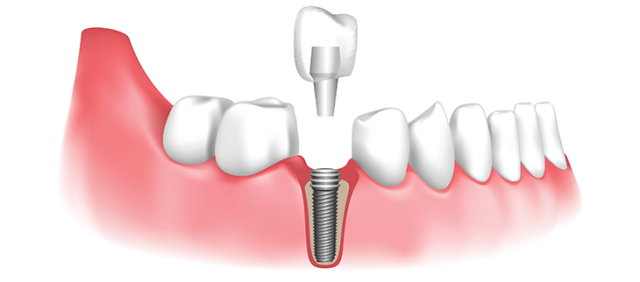
A titanium screw (like a tooth root ) that is surgically positioned into the jawbone beneath the gum line. A natural tooth colored crown is then placed over the Dental Implant. They are used to replace a single tooth or several teeth or to support partial or full dentures…
Read more about Dental Implant
Frequently Asked Questions
Replacement of Missing Teeth in Nepal — Your Questions Answered
Everything you need to know about dentures, bridges, implants, and all tooth replacement options at DentaLife Oral Concern, Kathmandu.
Why replacing missing teeth matters
-
A missing tooth is not just a cosmetic issue — it sets off a chain of dental and health problems that worsen over time if left untreated:
- Bone loss: The jawbone beneath a missing tooth begins to shrink (resorb) within months of losing a tooth, because the bone requires the stimulation of chewing to maintain its density. This can change your facial structure and make future replacement more complex.
- Teeth shifting: Adjacent teeth drift into the gap and the opposing tooth over-erupts (moves up or down into the space), misaligning your bite and creating new gaps that trap food and decay.
- Bite problems and TMJ strain: An uneven bite puts abnormal forces on the jaw joint, leading to jaw pain, headaches, and clicking.
- Difficulty chewing: Missing back teeth significantly reduce chewing efficiency, causing people to favour one side or avoid certain foods — affecting nutrition.
- Speech changes: Front teeth gaps affect pronunciation, causing lisping or whistling sounds.
- Gum disease: Drifted teeth create hard-to-clean areas where plaque accumulates, increasing decay and gum disease risk in the remaining teeth.
- Appearance and confidence: Visible gaps — especially in the front — significantly affect smile confidence and self-esteem.
The longer a missing tooth is left unreplaced, the more bone is lost and the more the surrounding teeth drift — making replacement more complex and expensive over time. Early replacement is always easier and more affordable. -
At DentaLife Oral Concern, Kathmandu, six tooth replacement options are available:
- Complete dentures — removable full-arch prosthesis for patients with no remaining teeth in one or both jaws
- Removable partial dentures (RPD) — removable prosthesis replacing one or several missing teeth, supported by remaining natural teeth and gums
- Cast partial denture (CPD) — a more durable, precision-fitted removable partial denture with a cobalt-chromium metal framework
- Dental bridge — a fixed restoration that spans a gap by anchoring an artificial tooth to the adjacent natural teeth (or implants)
- Dental implants — titanium screws surgically placed into the jawbone to act as artificial tooth roots, topped with a crown
- Implant-supported dentures — full or partial dentures anchored to dental implants for greater stability and comfort than traditional dentures
The best option for you depends on how many teeth are missing, the condition of your remaining teeth and jawbone, your health, and your budget. Your DentaLife dentist will assess all of these at your consultation and explain which options are suitable.
-
Here is a full comparison of all major options to help you understand the key differences:
Feature Implant Bridge Cast partial denture Removable denture Feel Most natural — like a real tooth Fixed, natural feel Removable — feels like a denture Removable — least natural Bone preservation Yes — stimulates bone No — bone under gap still shrinks No No — can accelerate bone loss Adjacent teeth Not touched Must be ground down for crowns Uses clasps — some pressure Uses clasps or rests Lifespan Decades — potentially lifelong 10–20 years 5–10 years 5–8 years Cleaning Brush normally Needs floss threader under bridge Remove to clean after meals Remove to clean after meals Cost Highest Mid-range Affordable Most affordable Surgery needed Yes No No No Best for Single or multiple missing teeth with sufficient bone 1–2 missing teeth with healthy adjacent teeth Multiple missing teeth, budget-conscious, good remaining teeth Many missing teeth, limited budget, or full edentulous arch Dental implants are the gold standard — they are the only option that preserves jawbone and does not involve adjacent teeth. However, the right choice always depends on your individual clinical situation and budget. Our dentist will help you decide.
Dentures (complete & partial)
-
A complete denture (full denture) is a removable prosthesis that replaces all the missing teeth in one or both jaws. It sits on the gum ridge and is held in place by suction and the muscles of the lips and cheeks.
Complete dentures are indicated when:
- All teeth in one or both jaws are missing (edentulous arch)
- Extensive periodontal (gum) disease has made all remaining teeth unsaveable
- Grossly decayed or broken teeth cannot be restored and must be extracted
- The patient does not have the financial resources or medical suitability for implants or bridges
Complete dentures are not suitable for patients with epilepsy (risk of choking on a dislodged denture during a seizure) or certain severe psychological disorders.
An implant-supported complete denture is a significantly more stable and comfortable alternative — anchored to dental implants rather than relying on gum suction. Ask our team if this option is suitable for you. -
Both are removable appliances that replace one or more missing teeth while retaining the remaining natural teeth. The key difference is the framework material:
- Removable partial denture (RPD): The base and framework are typically made from acrylic (plastic). Wire clasps hold the denture onto adjacent natural teeth. More affordable and easier to adjust or repair. Bulkier in the mouth and less precise fit than CPD.
- Cast partial denture (CPD): The framework is precision-cast from cobalt-chromium metal alloy. Much thinner, lighter, and more durable than an acrylic RPD. More precise fit to the natural teeth and gum contours. Better retention and less gum coverage, making it more comfortable. Costs more than a standard RPD but significantly less than a bridge or implant.
CPD is generally the preferred choice when a long-term, more comfortable removable partial solution is desired — particularly when multiple teeth on different parts of the arch are missing.
-
Proper denture care is essential for hygiene and longevity:
- Remove and clean after every meal: Rinse dentures under running water and brush the gum area inside your mouth after eating
- Clean dentures daily: Use a soft-bristled toothbrush and denture-specific cleaner (not regular toothpaste — it is too abrasive and can scratch the acrylic)
- Do not sleep with dentures: Remove them at night to give your gum tissue rest and prevent pressure sores. Sleeping in dentures increases the risk of gum inflammation and fungal infection.
- Store in water: Keep dentures in a container of clean water at room temperature when not in use — this prevents the acrylic from drying out and warping
- Never use hot water: Heat warps acrylic dentures, ruining the fit permanently
- Handle carefully: Hold dentures over a folded towel or basin of water when cleaning — they are fragile and break easily if dropped
- Regular dental check-ups: Visit DentaLife every 6–12 months — the gum ridge gradually changes shape over years, requiring denture relining or replacement
-
An implant-supported denture is a full or partial denture that is anchored to dental implants placed in the jawbone — instead of relying on gum suction or clasps on teeth for retention.
Advantages over a conventional denture:
- Far superior stability: The denture clips onto or screws into the implants — it does not slip or move during eating or speaking
- Better chewing efficiency: Implant retention allows much greater biting force than a conventional denture sitting on gum tissue
- Bone preservation: The implants stimulate the jawbone, preventing the bone loss that conventional dentures accelerate over time
- Greater comfort: No denture adhesive needed; less gum coverage means less tissue irritation
- Improved confidence: No fear of the denture slipping or falling out in social situations
- Still removable: Unlike fixed implant bridges, implant-supported dentures can be removed for cleaning
Implant-supported dentures require sufficient jawbone volume and a surgical procedure for implant placement. Your dentist will assess your bone levels at consultation.
See our Dental Implant page for full details on implant procedures and costs at DentaLife.
Dental bridge
-
A dental bridge is a fixed (permanently cemented) prosthesis that replaces one or more missing teeth by spanning the gap. It consists of:
- Abutment crowns: Crowns placed over the natural teeth (or implants) on either side of the gap — these serve as the anchors that support the bridge
- Pontic(s): The artificial tooth (or teeth) suspended in the middle of the bridge, filling the gap
The bridge is fabricated as a single connected unit in the dental lab and cemented permanently onto the prepared adjacent teeth — it cannot be removed by the patient.
Bridge materials available at DentaLife:
- Metal bridge — strongest, most durable, least aesthetic (silver/gold colour)
- Metal-ceramic bridge (PFM) — tooth-coloured outer layer over metal; popular balance of aesthetics and cost
- All-ceramic bridge (eMax) — most natural appearance for front teeth gaps
- Zirconia bridge — strongest ceramic, tooth-coloured, excellent for both front and back gaps
-
Advantages of a bridge:
- Fixed — does not need to be removed; feels more natural than a denture
- No surgery required — the procedure is entirely non-invasive
- Completed in 2 appointments — faster than an implant
- Restores chewing function and aesthetics effectively
- More affordable than a dental implant
- Appropriate when adjacent teeth already need crowns anyway
Disadvantages of a bridge:
- Adjacent teeth must be permanently ground down to receive the anchor crowns — healthy tooth structure is sacrificed even if those teeth had no problems
- Does not prevent jawbone loss under the pontic — bone continues to shrink in the gap over time
- Harder to clean underneath — requires a floss threader or interdental brush to clean under the pontic daily
- If one anchor tooth develops decay or fails, the entire bridge may need replacement
- Shorter lifespan than a dental implant
A bridge is an excellent option when the adjacent teeth already have large fillings or need crowns, when the gap is small (one or two teeth), or when implant surgery is not suitable. If the adjacent teeth are healthy and unrestored, an implant preserves them better. -
A well-maintained dental bridge typically lasts 10–20 years — and sometimes longer. The most common reasons for bridge failure are:
- Decay developing at the margins of the anchor crowns due to inadequate oral hygiene
- Failure or fracture of one of the anchor (abutment) teeth
- Cement washout allowing bacteria under the bridge
- Porcelain chipping on metal-ceramic bridges from biting hard objects
- Teeth grinding (bruxism) accelerating wear
Good oral hygiene — including daily cleaning under the bridge with a floss threader or interdental brush — and regular 6-monthly dental check-ups are the most important factors in maximising bridge lifespan.
Dental implants
-
A dental implant is a small titanium screw surgically placed into the jawbone — replacing the root of the missing tooth. Once the implant integrates with the bone (osseointegration), a tooth-coloured crown is placed on top, creating a complete artificial tooth that looks, feels, and functions like a natural one.
Dental implants are considered the gold standard for tooth replacement because:
- Most natural feeling and function: An implant crown behaves exactly like a natural tooth — you can eat, speak, and smile without restriction
- Preserves jawbone: The titanium root stimulates the bone when you chew, preventing the bone loss that occurs with all other replacement options
- Does not affect adjacent teeth: Unlike a bridge, no neighbouring teeth need to be ground down or altered
- Longest lifespan: Dental implants can last decades — potentially a lifetime — with proper care
- Independent: Each implant is self-supporting — if one fails, others are unaffected
Read our complete Dental Implant page for full information on the procedure, costs, and what to expect at DentaLife Kathmandu. -
Most healthy adults with a missing tooth or teeth are suitable candidates for dental implants. Key requirements include:
- Adequate jawbone volume: Sufficient bone height and width is needed to house the implant. Patients who have had missing teeth for a long time may have bone loss requiring a bone graft procedure first.
- Healthy gums: Active gum disease must be treated and resolved before implant placement
- Good general health: Uncontrolled diabetes, blood clotting disorders, and certain medications (e.g. bisphosphonates) can affect healing and require careful assessment
- Non-smoker or willing to stop: Smoking significantly increases implant failure rates — patients are strongly advised to stop smoking before and after surgery
- Completed jaw growth: Implants are not placed in teenagers whose jaws are still growing — usually under 18 years old
A clinical examination and X-ray (or CT scan) at DentaLife will determine your suitability. Patients who are not immediately suitable may become suitable after preparatory treatment such as bone grafting or gum treatment.
Cost & choosing the right option
-
At DentaLife Oral Concern, Kathmandu, approximate costs for tooth replacement options are:
Option Approx. cost Notes Complete denture NPR 15,000–25,000 Per arch; acrylic or flexible material Removable partial denture NPR 8,000–18,000 Depends on number of teeth replaced Cast partial denture (CPD) NPR 18,000–30,000 Metal framework; more durable than RPD Dental bridge (per unit) NPR 10,000–26,000 per crown unit 3-unit bridge = 3 × crown price; material dependent Dental implant From NPR 75,000–85,000 Implant fixture + crown; bone graft extra if needed Implant-supported denture From NPR 150,000+ Depends on number of implants; full arch varies For the most current and procedure-specific pricing, visit our Prices & Services page or message us on WhatsApp. Your dentist will give you an exact cost at the consultation after assessing your specific case.
A higher upfront cost does not always mean the more expensive option is out of reach — dental implants last significantly longer than dentures or bridges, often making them more cost-effective over a 10–20 year timeframe. -
Yes — in most cases it is possible to start with a denture and upgrade to an implant or implant-supported denture later. However, there are important considerations:
- Bone loss continues: Every month without an implant, the jawbone under the gap continues to shrink. More bone loss means a more involved bone grafting procedure before implants can be placed — which adds cost and treatment time.
- Earlier is easier: Placing an implant sooner after tooth loss means less bone loss to address and a simpler procedure overall.
- Dentures can be modified: Some denture designs can be converted to implant-supported dentures later — discuss this option with your dentist at the outset so the denture is designed with future upgrades in mind.
- Financial planning: Our team can help you understand the total cost of your preferred long-term solution so you can plan ahead.
Start the conversation about implants early — even if you cannot proceed immediately. Our dentist will advise on the best timing and how to preserve your options while managing your current budget. -
The ideal timing depends on the replacement option chosen:
- Immediate implant: In selected cases, an implant can be placed on the same day as the extraction — your dentist will assess if the socket is suitable
- Delayed implant: Most commonly, implant placement is done 2–3 months after extraction, once the socket has healed
- Bridge: The gap is allowed to fully heal for 6–8 weeks before bridge preparation begins
- Immediate temporary denture: A temporary denture can be inserted on the day of extraction to fill the gap while the socket heals — this prevents the aesthetic and functional issues of having an obvious gap during healing
- Definitive denture: Fabricated 2–3 months after extractions once the gum has fully healed and stabilised in its final shape
Do not leave a gap unfilled for longer than necessary. Even a temporary removable denture during the healing period prevents adjacent teeth from drifting, making the definitive replacement easier and more successful.
Booking & getting started
-
Booking a consultation is quick and easy:
- WhatsApp (fastest): Message +977-9843488192 with your preferred date and time — we reply within 2 hours on working days (Sunday–Friday)
- Call us: Mobile +977-9843488192 · Landline +977-1-4163520
- Walk-in: Visit us at Kantipath, Jamal, Kathmandu — Sunday to Friday, 10AM–6PM
- Online: Use our online appointment form
At your consultation our dentist will examine your mouth, take X-rays if needed, explain all suitable replacement options for your specific case, and provide clear pricing — so you can make an informed decision before any treatment begins.
Not sure which option is right for you? Just come in — our dentist will assess your teeth, bone, and budget and explain every option clearly. There is no pressure to decide on the day.
Missing one or more teeth?
Book your consultation via WhatsAppDentaLife
Dental Clinic in Kathmandu





Copyright © 2026 by DentaLife Oral Concern Pvt. Ltd. – Dental Clinic in Kathmandu. +977-9843488192
Copyright © 2025 by DentaLife Oral Concern Pvt. Ltd – Dental Clinic in Kathmandu. All rights reserved.
+977-9843488192